
Learning Center · Care and storage
How to Store and Handle Raw Trading Cards Before Grading or Selling
As an Amazon Associate I earn from qualifying purchases. This guide includes optional paid Amazon links; purchases through them may earn a commission. Product links do not affect inspection guidance.
A raw card can spend weeks or years between purchase, inspection, grading, and sale. Handling, unsuitable protection, and an unstable storage place can create avoidable risk during that wait. The aim is simple: know where the card is, keep it protected without forcing it into a holder, and disturb it only when an inspection or transaction actually requires it. This is a care workflow, not a submission-packing instruction.
Prepare the work area before opening protection
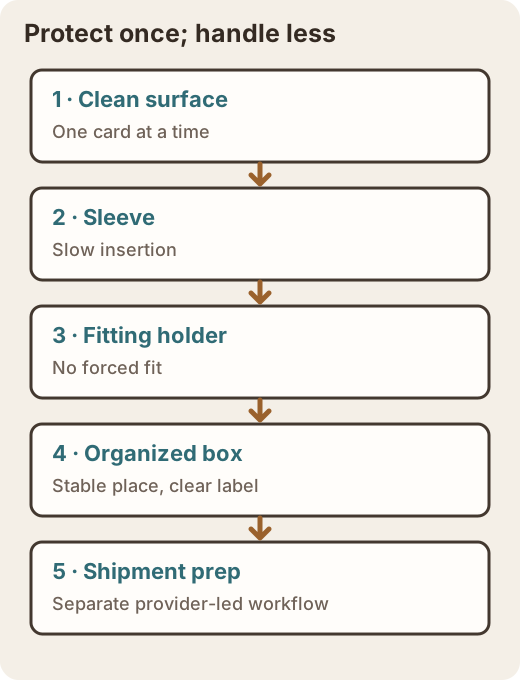
Clear a level table and remove drinks, food, pens, loose tools, and rough objects. A clean, plain mat or other smooth surface makes a card easier to see and keeps it away from visible grit. Check the surface for dust before placing a card on it. If you are photographing, set the light and camera first so the card does not sit exposed while you rearrange equipment. Keep enough free space to lay down one card and its holder without stacking them.
Use clean, dry hands. Hand lotion, moisture, and food oils can transfer to a surface. Handle by the edges where practical, with light pressure and attention to corners. Do not pinch a corner, drag a fingertip across foil, or bend the card to test stiffness. Gloves are not a guarantee of safe handling: a loose glove can reduce grip and snag an edge. Choose the method that gives you stable control and minimal contact.
Use a protective stack that fits the card
A clean sleeve provides the first barrier against incidental surface contact. A suitable rigid or semi-rigid holder can protect the sleeved card from bending during ordinary storage or transport. Fit matters: a tight sleeve can catch a corner, and an oversized holder may let the card shift. Avoid forcing a thick, unusual-size, or curved card into a standard-size product. Check that the holder is clean and that its opening or edge will not scrape the card.
Optional examples: penny sleeves on Amazon (paid link) and semi-rigid card holders on Amazon (paid link). Check fit before buying or using either supply.
Open the sleeve fully and guide the card in slowly, keeping a corner from striking the plastic seam. If resistance develops, stop and reassess instead of pushing harder. When removing a card, support it as it comes out rather than pulling it by a corner. Repeatedly switching between sleeves and holders for “one more look” increases opportunities for a slip. Make the inspection complete enough to return the card to protection once.
Organize so you do not need to re-handle
Put protected cards in a box or compartment that supports them without heavy compression, bending, or free movement. Keep sets, candidates for grading, and sale inventory distinguishable with a simple list or dividers. Write identifiers on the box or a separate divider, never directly on a card or sleeve while the card is inside. A short note such as “front lower edge uncertain; rephoto needed” prevents you from reopening everything to remember which copy had the issue.
For larger collections, view an example trading-card storage box on Amazon (paid link). Check that protected cards fit without compression.
If you have multiple cards, process one at a time and keep the card paired with its label or inventory row. Avoid spreading several raw cards across the table where a sleeve, holder, or hand can slide over another card. Store boxes where they will not be knocked over or used as a surface for heavy objects. Make access deliberate rather than leaving cards loose on a desk between sessions.
Choose a stable storage place
Choose a place away from direct sunlight, heaters, damp areas, and repeated temperature swings. Library of Congress guidance on paper preservation explains why light, heat, and moisture matter for paper; trading cards can contain additional coatings and foils, so that guidance is a general care principle rather than a card-specific humidity specification. Inspect the storage area periodically for dampness, leaks, pests, or a failing box.
Keep containers off a floor prone to spills or flooding. Do not place them next to a heater, sunny window, or condensation-prone wall. If a sleeve or holder becomes cloudy, scratched, or dirty, decide whether a careful replacement is worth the handling risk; a cosmetic scratch on outer plastic is not automatically damage to the card. The layer troubleshooting guide helps separate those possibilities.
Manage dust without aggressive cleaning
Keep the table and holders clean before the card is exposed. Loose dust on the outside of a holder can usually be addressed there; dust on a raw card should not prompt rubbing, erasing, or solvent use. Liquids, polishes, adhesive rollers, and abrasive cloths can create or worsen surface damage. If a particle cannot be removed by a conservative method without contact risk, document it and stop. If loose debris prevents inspection, a hand air blower used gently may help without touching the surface; stop if the card or a lifted edge could move. It will not remove adhered residue.
For inspection, use the condition guide and moving-light method before deciding whether a visible spot is actually on the card. Photographing a mark is often safer than trying to “fix” it. Do not assume a cleaner-looking card after intervention will be viewed as unaltered by a grading service.
Move cards safely around the home or to a show
Use a closed, stable box or case that prevents protected cards from sliding, leaning sharply, or carrying the weight of other gear. Keep the container upright where possible and avoid placing it on a seat where it can fall during a turn. At a show or store, take out only the card needed for the discussion, maintain control of the holder, and make sure a buyer or staff member understands whether the card may be removed. A simple inventory check before leaving reduces accidental mix-ups.
Switch workflows when shipment begins
Long-term storage and an actual grading shipment are different tasks. Once you choose a grader and service level, check that provider's current holder, order, labeling, packing, and shipping instructions. Reconfirm card identity and order before sealing the package. The site's submission-preparation guide covers that transition; do not treat a storage box or everyday holder as automatically suitable for mailing.
For a card that is being sold raw, state what you observed, protect it for the agreed delivery method, and avoid further unnecessary handling after listing photos are complete. For a card still under review, preserve the open question in your notes. The care routine succeeds when the card can be retrieved, examined, and handed off without new avoidable marks—not when it has been inspected over and over.